


 LED
LED

 LCD
LCD


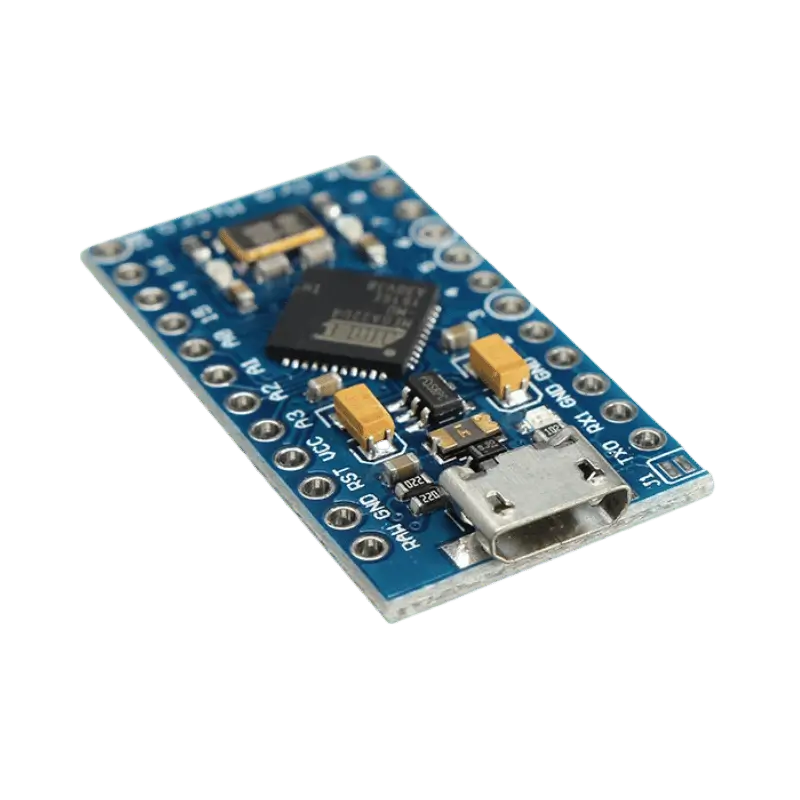


Arduino Micro
Product Overview
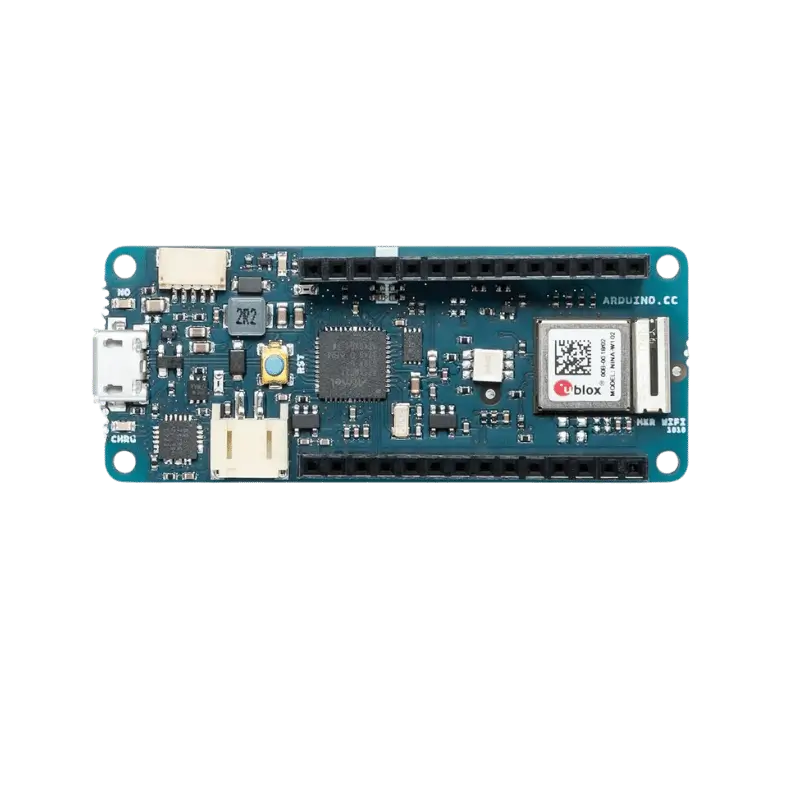
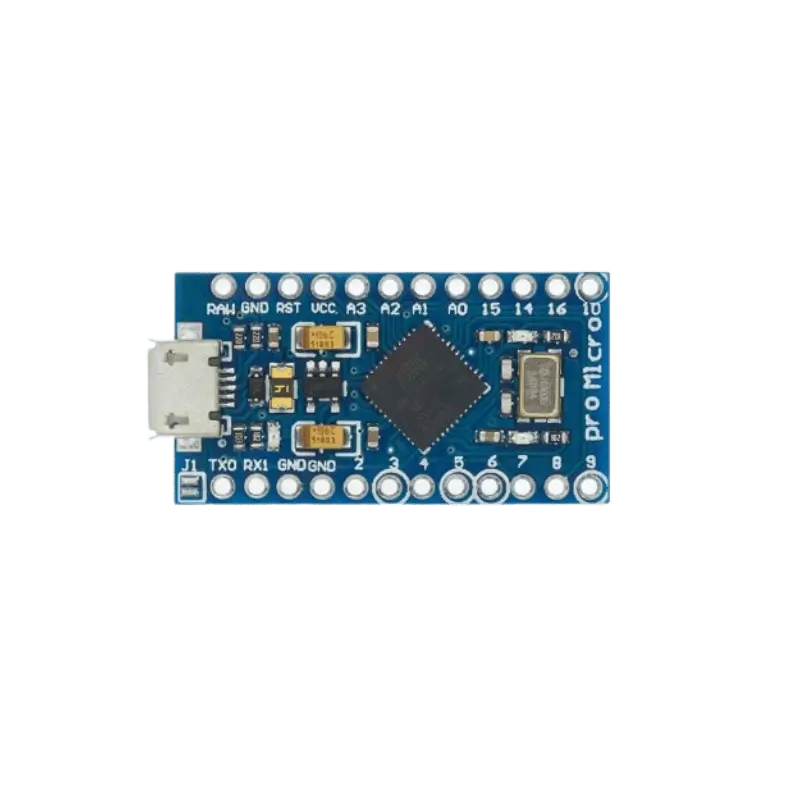
The Arduino Micro from Pro Tronix is a small but mighty microcontroller board developed in conjunction with Adafruit. It is based on the ATmega32U4, the same processor used in the larger Arduino Leonardo.
The defining feature of the Micro is its Native USB support. Because the USB communication is handled directly by the main chip, the board can appear to a connected computer as a standard Human Interface Device (HID). This makes it incredibly easy to build custom macro pads, flight simulator joysticks, or assistive technology. Despite its tiny footprint (even smaller than a Nano), it offers more analog inputs and more PWM channels, providing professional-grade I/O in a pocket-sized package.
Technical Specifications
| Feature | Specification |
| Microcontroller | ATmega32U4 |
| Operating Voltage | 5V |
| Input Voltage (VIN) | 7V – 12V (Recommended) |
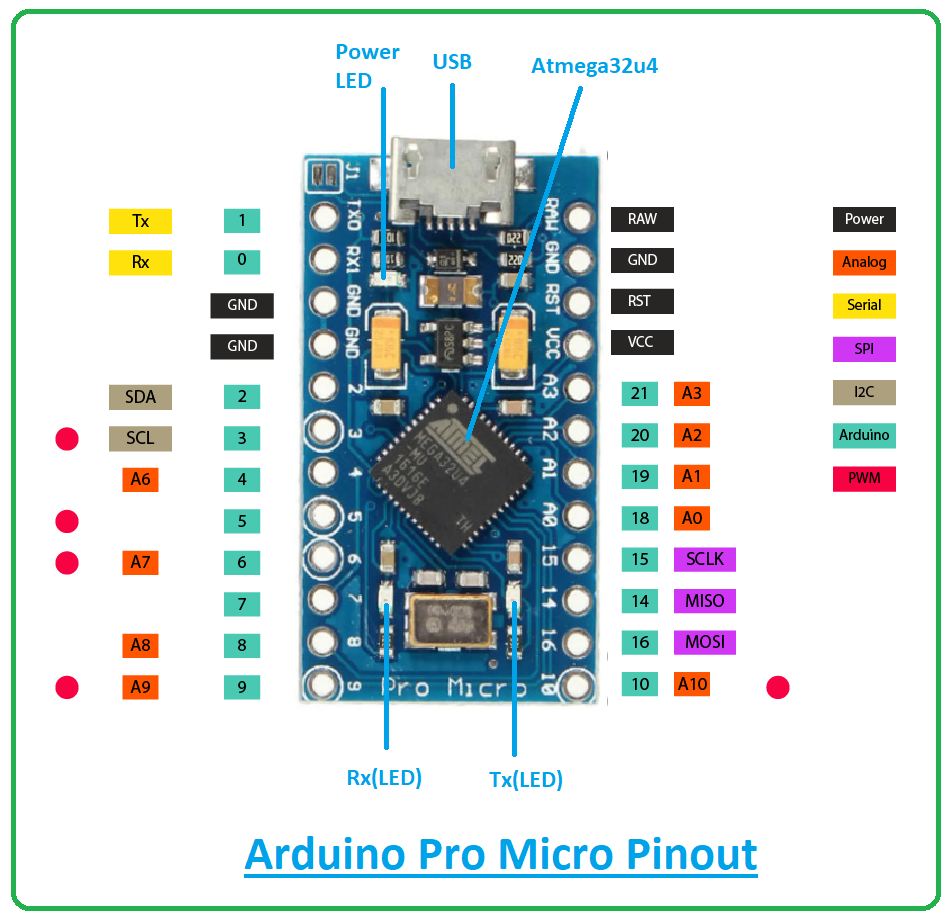
| Digital I/O Pins | 20 |
| PWM Channels | 7 |
| Analog Input Pins | 12 (A0-A5 & Digital pins 4, 6, 8, 9, 10, 12) |
| Flash Memory | 32 KB (4 KB used by bootloader) |
| SRAM / EEPROM | 2.5 KB / 1 KB |
| Clock Speed | 16 MHz |
| USB Connector | Micro-USB |
| Supplier | Pro Tronix |
Key Features
Native HID Support: Can emulate a mouse or keyboard right out of the box using the built-in
KeyboardandMouselibraries.Superior I/O: Offers 20 digital pins and 12 analog inputs, significantly more than the Arduino Uno or Nano.
Breadboard Friendly: The pins are spaced specifically to fit into a standard breadboard, making it easy to wire and prototype.
No Serial Converter Needed: Since the 32U4 handles USB natively, there is no need for a secondary chip (like CH340 or FTDI), reducing latency.
Hardware Serial & USB: The hardware serial (
Serial1) is separate from the USB serial (Serial), allowing you to talk to a Bluetooth or GPS module while still debugging via USB.
Common Applications
Custom Game Controllers: Building flight sticks, steering wheels, or retro-gaming arcade buttons.
Macro Pads: Creating a dedicated 16-button keyboard for video editing or coding shortcuts.
Wearable Tech: Small enough to be sewn into clothing or embedded in 3D-printed jewelry.
MIDI Devices: Creating custom MIDI sliders and pads for music production.