


 LED
LED

 LCD
LCD


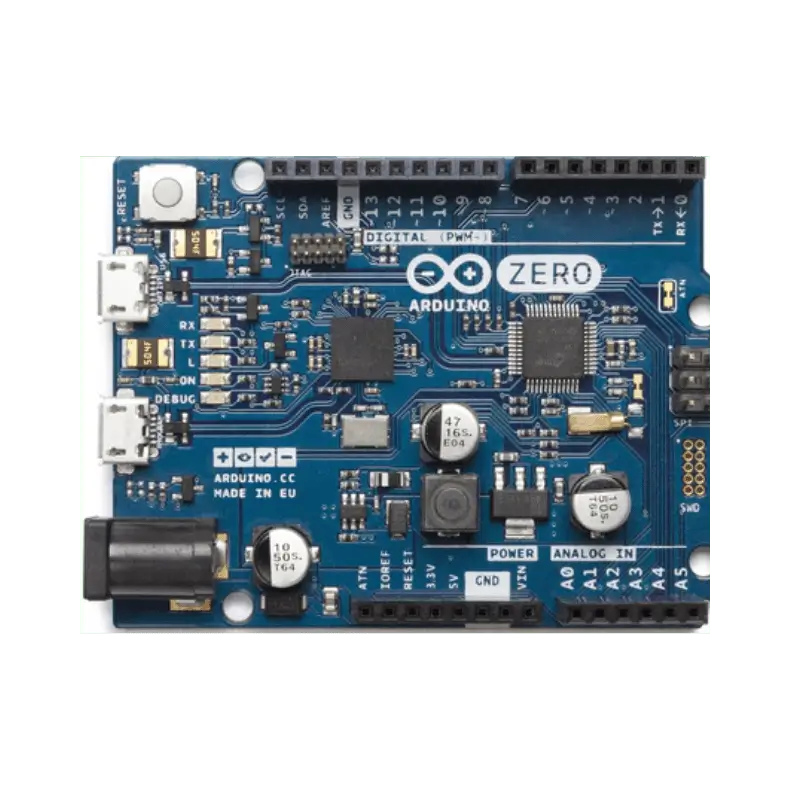


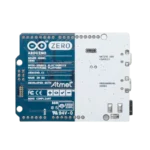
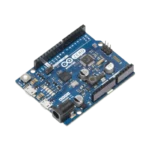


Arduino Zero | 32-Bit ARM Cortex-M0+ | Integrated Debugger (EDBG)
Product Overview
The Arduino Zero from Pro Tronix represents a significant leap forward from the 8-bit architecture of the Uno. It is designed to provide a more powerful platform for makers who need more memory, faster processing, and professional-level debugging capabilities.
The heart of the Zero is the Atmel SAMD21 MCU, a 32-bit ARM core that runs at 48MHz—three times the speed of the Uno. One of its most revolutionary features is the Embedded Debugger (EDBG). This allows you to debug your code in real-time without any extra hardware, making it much easier to track down complex bugs. With a 10-bit DAC for true analog output and a 12-bit ADC for high-precision sensor reading, the Zero is built for precision.
Technical Specifications
| Feature | Specification |
| Microcontroller | ATSAMD21G18, 32-Bit ARM Cortex M0+ |
| Clock Speed | 48 MHz |
| Operating Voltage | 3.3V (Pins are NOT 5V tolerant) |
| Flash Memory | 256 KB |
| SRAM | 32 KB |
| Digital I/O Pins | 20 |
| PWM Pins | 10 (All except pins 2 and 7) |
| Analog Input Pins | 6 (12-bit ADC) |
| Analog Output Pins | 1 (10-bit DAC) |
| Debug Interface | Integrated EDBG (Micro-USB) |
| Supplier | Pro Tronix |
Key Features
Native 32-bit Performance: Handles 4-byte wide data in a single clock cycle, outperforming traditional 8-bit boards in math and data processing.
On-Board Debugging: The integrated EDBG provides a full debug interface; just connect to the “Programming” USB port to step through your code.
High-Resolution Analog: Features a 12-bit ADC for finer sensor readings and a 10-bit DAC to produce a real analog voltage (sine waves, audio, etc.).
Advanced Peripherals: Includes a Real-Time Counter (RTC), DMA controller for high-speed memory tasks, and I2S for digital audio.
Dual Micro-USB Ports: One port for the Native USB (acting as a mouse/keyboard/host) and one for Programming and Debugging.
Common Applications
Smart IoT Devices: Handling complex networking protocols and data encryption with ease.
Wearable Technology: Compact yet powerful enough for signal processing in fitness or medical trackers.
High-Tech Automation: Precision motor control and high-speed sensor feedback in industrial prototypes.
Digital Audio: Using the I2S and DAC to generate or process audio signals.
⚠️ Logic Level Warning: The Arduino Zero operates at 3.3V. Connecting 5V signals to its I/O pins will likely damage the board. Always use logic level converters when connecting to 5V modules.